Showing posts with label cynthia. Show all posts

Tuesday, February 26, 2013

Investigating Independent Assortment


INVESTIGATING INDEPENDENT ASSORTMENT

Mendel observed the effects of independent assortment when he carried out his dihybrid crosses. When he crossed two plants that bred true for different versions of two traits, the first-generation offspring all displayed the same phenotype (the dominant phenotype for both traits). However, when these plants were crossed, the second-generation offspring included four different phenotypes.

Mendel carefully recorded the numbers of phenotypes among the offspring of many dihybrid crosses. He found that certain combinations of phenotypes among the second-generation offspring occur in a 9:3:3:1 ratio, on the average. We now know that this pattern occurs because genes on pairs of homologous chromosomes are sorted out for distribution into one gamete or another independently of gene pairs of other chromosomes.

Activity

In this activity, you will first access the meiosis tutorial provided by the University of California, Santa Barbara. The tutorial demonstrates the random assortment of chromosomes into gametes. Next you will complete a tutorial quiz about independent assortment. This is part of The Biology Project from the University of Arizona.

Part 1.

Use your browser to go to the meiosis tutorial at

http://www.sumanasinc.com/webcontent/animations/content/independentassortment.html

Use the tutorial to learn how to determine which allele combinations are possible in two or even three trait crosses.

Part 2.

Use your browser to go to the independent assortment tutorial at
http://www.biology.arizona.edu/mendelian_genetics/problem_sets/dihybrid_cross/dihybrid_cross.html
Go through questions 1-9 of the tutorial. If you answer any question incorrectly, review the tutorial material and try again.
When you have completed this much of the tutorial, answer the questions below:
1. What type of gametes will be produced by a plant of genotype AaBb?
cross, the phenotypic ratio is 9:3:4. There are only three different phenotypes 
for hair color, agouti, black and albino. The individual with genotype recessive 
for both traits, i.e. aabb, has the same albino phenotype as the aaBB and aaBb 
individuals due to epistasis.
2. What type of gametes will be produced by a plant of genotype aabb?
might be caused by the recessive homozygous, recessive bb genotype.

Rather than the 9:3:3:1 seqregation of phenotypes normally seen with an AaBb x AaBb dihybrid 

Same as stated above, only the albino phenotype masks any phenotype that 


3. List all the genotypes you would find among the offspring of an AaBb x aabb test cross.
Half of the gametes get a dominant S and a dominant Y allele; the other half of the gametes get a recessive s and a recessive y allele.Both parents produce 25% each of SY, Sy, sY, and sy.


4. What is the expected phenotypic ratio of the offspring of an AaBb x aabb test cross?
These phenotypes will appear in a predicted 1:1s:1:1 ratio.

5. List all possible gametes from a trihybrid individual whose genotype is RrSsTt.
If only recessive traits were scored, we would only consider offspring with one
phenotype: dented, green seeds. A 9:3:3:1 ratio phenotypes would be impossible.


Wednesday, February 20, 2013

Let's Make A Baby!

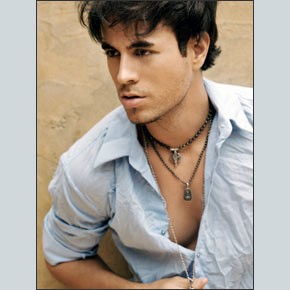
     For this experiment, my classmates and I were to partner up and make a baby! Not literally-but on paper with the cool, fun techniques of biology! As my class evened out to an ODD number of students that day, we decided that it would only be fair to make my partner the great and glorious Enrique Iglecias!

(Two pretty attractive people, we know!)
So for this project, my partner and I were to look at each others' faces and match up listed features on the page in order to decide upon which features our child will likely have. This helped us determine exactly how our child will look.


A long and tough process, but we were able to define each others' beautiful traits our child would probably be getting.


Following are the final results...

(Adorable!!)


Thursday, January 17, 2013

Onion Root Tips Mitosis WebQuest


ONION ROOT TIPS AND THE CELL CYCLE


In this activity, you will calculate the lengths of the various phases of the cell cycle in an onion root tip. First you will view some slides and graphics of onion root tips provided by the Molecular Expressions Photo Gallery. Then you will complete the online activity provided by the Biology Project at the University of Arizona.

Part 1.

Use your browser to go to Molecular Expressions Photo Gallery: Mitosis

http://www.microscopy.fsu.edu/micro/gallery/mitosis/mitosis.html

Notice in the micrograph at the top of the page that there are cells in a variety of stages. View the onion slides in this section, then click on "mitosis" in the sentence "Learn the steps in mitosis ... " This will take you to a Java tutorial.  Keep in mind what you have learned here as you proceed to the second part of the activity.

Part 2.

Use your browser to go to Online Onion Root Tips at

http://www.biology.arizona.edu/cell_bio/activities/cell_cycle/assignment.html
Begin by reading the description of the five major cell phases. You will need to keep this information in mind during the activity.

Make a copy of the data sheet that appears on the second page. You will need it to answer the questions.

Proceed through the activity, identifying the phase for each cell you are shown. Pay attention to the hints if you misidentify a cell at first.

When you have completed the activity, answer the following questions:

1. What percent of cells were in interphase?
20%2. What percent were in mitosis?
100% All of the cells are in different stages of mitosis.3. Which phase of mitosis takes the longest?
Interphase
4. During which stage is the nucleolus visible as a dark spot?
Prophase5. How can you recognize a cell in metaphase?
It doesn't seem as dark as prophase; It's much lighter and looks like it's beginning to separate.6. How might you figure out how long (in minutes and/or seconds) each phase of the cell cycle takes based on the data from these onion root cells? Explain your logic and show your calculations and results below.

7. Produce a pie chart in Create-a-Graph that shows the relative lengths of each stage of the cell cycle in these cells including interphase and each stage of mitosis. You can embed the graph here.


InterphaseProphaseMetaphaseAnaphaseTelophase
Number of Cells201032136
Percentage55.55%28%8.33%5.56%2.78%100%


Thursday, January 10, 2013

Cancer Cells

Cells go through a cycle which includes many processes. These are:
1. Interphase
2. Prophase
3. Metaphase
4. Anaphase
5. Telophase

How do cancers...happen??
When cancers develop, it is because proteins don't work the same way because cells don't go from one stage to the next properly in their cycle. The cancer cells reproduce at a far faster rate than normal cells do. But those cells all seem to have a loss of function. This happens because the cell division does not happen properly. In most cases, cancer takes many years to develop.

So...give an example of a cancer and how it happens...
Let's use breast cancer as an example!
So breast cancer is a type of cancer that will form in any part of the breast. It's more commonly seen in women, but men are also at risk of getting this cancer, too. When cancer begins to occur, cells begin to go through a change which rapidly spreads through the body (as previously stated). Women release a hormone, estrogen, which stimulates cell division, but may effect cells and DNA to be damaged or permanently effected. Women who have not been through a first term of pregnancy still have immature cells and can be more easily effected by this because their cells contain carcinogens that are not as strong or able to repair damaged cells as easily.

How can one treat this?
Through cell technology and radiation techniques, scientists have found new ways to practically zap away the bad! Treatment programs can be created to help the side effects of the cancer be reduces and can even eliminate the cancer altogether!

Sources:
Scitable by Nature Education
As it is the new year, I would like to present to you this month's end-of blog-picture topic! The snake! Happy 2013, the year of the snake!


Tuesday, January 8, 2013

What You'll Wish You'd Known Response

What You'll Wish You'd Known

     In the article, What You'll Wish You'd Known, I read about how the average graduation speech about "never giving up" and "following your dreams"...is all misleading and wrong. I definitely agree with this speech because things are always different in high school than they are in the real world. When we are in high school, we are still fairly new to the world, and learning exactly where our place is. If we follow the dreams that we have while we don't really know ourselves, we're bound to end up somewhere later on that we don't want to be. However, if we do what the article tells us to do and just keep pushing on, believing that we're gonna make it, then we're more fit to get somewhere good. I can see how this speech was denied for graduation, however. At this time in our lives, we've all figured out that the tooth fairy, Santa Claus, and even the Easter bunny are all- yes- fake. But we still believe in some kind of magic. A magic of hope, dreams, and never giving up. We're still children, in this sense. But if we hold on to something forever, we're bound to have so many corpses of dreams that it could potentially lead down a path to self destruction. So basically, we must go with the flow and keep fighting!

Friday, December 14, 2012

Phenylketonuria Web Quest


PHENYLKETONURIA: A METABOLIC DISORDER

Metabolic disorders are genetic diseases that affect the body's ability to perform its normal chemical reactions. Many metabolic disorders result from enzyme defects. Recall that a metabolic pathway is a stepwise sequence of enzyme-mediated reactions. If one enzyme in a metabolic pathway is defective, that enzyme's substrate may accumulate and the pathway may not be completed. This may result in a buildup of harmful substances or a shortage of required molecules.

Activity

In this exercise, you will use the Web links below to gather information about the metabolic disorder phenylketonuria (PKU). Use what you learn to answer the questions at the bottom of the page.


Your Genes, Your Health: Phenylketonuria


NSPKU Home Page

Texas Department of Health Genetic Disorders

Phenylketonuria - The Genetics


Questions

1. What enzyme is most commonly defective in people with phenylketonuria?
An enzyme called Phenylalanine Hydroxylase 
2. What reaction does this enzyme catalyze? (What is the substrate and what product is produced?)
PAH. Without this, a person could develop high levels of phenylalanine in the brain, which could poison neurons and cause mental retardation or epilepsy.
3. Describe the symptoms of phenylketonuria.
Smaller than normal head, mental retardation, epilepsy, musty odor, and lighter skin and hair4. What causes the symptoms of PKU, the lack of a substance or the buildup of one?
Phenylalanine reacts badly with PKU because the hindered enzyme is one of a metabolic nature.5. How common is phenylketonuria? How is it treated?
It's not very common at all. It's treated by a low-protein diet that is carried out throughout the patient's life.


Thursday, November 29, 2012

Metabolism Intro Notes

Forms of Energy
    Law of thermodynamics
    Metabolic reactions
ATP
Metabolic Pathways
-energy of activation-enzymes
-photosynthesis
-cellular respiration


2 Types of energy:
Kinetic
-energy of motion
-mechanical

Potential
-Stored energy
-chemical


Laws of Thermodynamics
First law:
-law of conservation of energy
-energy cannot be created or destroyed
-energy CAN be changed from one form to another
Second Law:
-Law of Entropy
-when energy is changed from one form to another, there is a loss of usable energy
-waste energy goes to increase disorder

Metabolic Reactions and Energy Transformations
Metabolism:
-sum of cellular chemical reactions in cell
-reactants participate in reaction
-products form as result of reaction
Free energy s the amount of energy available to perform work
-Exergonic Reactions-Products have less free energy than reactants
-Endergonic reactions-Products have more free energy than reactants

ATP and Coupled Reactions
Adensonine Triphosphate (ATP)
-High energy compound used to drive metabolic reactions
-constantly being generated from adenosine diphosphate (ADP)
Composed of:
-adenine and ribose (together=adensosine)
-three phosphate groups
Coupled reactions
-energy released by an exergonic reaction captured in ATP
-that ATP used to drive an endergonic reaction

ATP= ADP + P + Energy


Work-Related Functions of ATP
Primarily to perform cellular work
-Chemical work-Energy needed to synthesize macromolecules
-Transport work-Energy needed to pump substances across plasma membrane
-Mechanical work-Energy needed to contract

Metabolic Pathways
-Products of an earlier reaction become reactants of a later reaction
-Such linked reactions form a metabolic pathway
   -Begins with a particular reactant
   -Proceeds through several intermediates
   -Terminates with a particular end product

Enzymes
-Protein molecules that function as catalysts
-the reactants of an enzymatically accelerated reaction are called substrates
-each enzyme accelerates a specific reaction
-each reaction in a metabolic pathway requires a unique and specific enzyme
-end product will not appear unless ALL enzymes present and functional

Enzymes: Energy of Activation
Reactants often "reluctant" to participate in reaction
-energy must be added to at least one reactant to initiate the reaction
-energy of activation
Enzyme Operation:
-Enzymes operate by lowering the energy of activation
-Accomplished by bringing the substances


Irreversible Inhibition
Materials that irreversibly inhibit an enzyme are known as poisons
Cyanides inhibit enzymes resulting in all ATP production
Penicillin inhibits an enzyme unique to certain bacteria
Heavy metals irreversible bind with many enzymes
Nerve gas irreversibly inhibits enzymes required by nervous system


Thursday, November 15, 2012

Microscopy

Your supplies:
2 Artifacts
1 Test Tube

Now let's do this!


The main objective in this project is to test the ability to use a microscope. Objectives will be tested.

Start off on lowest magnification possible, find the desired area, and magnify!

There is a part just below the microscope call the condenser. It has an iris under microscope. If no light is coming through, the iris must be twisted. So of course, this is a sign that there's a little bit of microscope anatomy we need to touch up on first!

There!
First, we tested hair! The outcome was very interesting. It looked like the following:

JUST KIDDING!

It REALLY looked like...


Next, we checked out some infected pork! That one was very interesting to see up close! It looked somewhat like the following...

Notice the three chunked spots. That, we concluded, is the infection. Pretty nasty, but neat, right??

Microscopes are awesome! Just with one little peek through, one's world can be completely magnified! Very nifty tool that everyone should have to experience in playing with!


Cystic Fibrosis Research


CYSTIC FIBROSIS - A DISORDER OF MEMBRANE TRANSPORT

A great variety of proteins have roles in moving molecules and ions across cell membranes. Passive transport proteins permit certain substances to diffuse down concentration gradients by moving through the protein's interior. Active transport proteins use ATP energy to pump substances across the membrane against their concentration gradients. To investigate the importance of transport proteins, we will consider the effects of cystic fibrosis, a genetic disorder in which there is a defect in a transport protein..
Activity

Part 1.

In this part of the activity you will visit the Cystic Fibrosis Foundation’s web site to learn about the causes and symptoms of cystic fibrosis.
Use your browser to go to http://www.cff.org/home/
Use the information provided in the “About cystic fibrosis” section to answer the following questions:


1. What are the signs and symptoms of cystic fibrosis?

  • very salty-tasting skin;
  • persistent coughing, at times with phlegm;
  • frequent lung infections;
  • wheezing or shortness of breath;
  • poor growth/weight gain in spite of a good appetite; and
  • frequent greasy, bulky stools or difficulty in bowel movements.

  • 2. How common is this disorder?
  • About 1,000 new cases of cystic fibrosis are diagnosed each year.
  • More than 70% of patients are diagnosed by age two.
  • More than 45% of the CF patient population is age 18 or older.
  • The predicted median age of survival for a person with CF is in the late 30s.

  • 3. How is cystic fibrosis diagnosed?

    Most people are diagnosed as babies, or before the age of 2 through screening. A sweat test (the more commonly used test) or a genetic test with be performed to determine whether or not it is there.

    4. How is cystic fibrosis inherited? Does everyone who has a mutant gene for the protein have cystic fibrosis?
    One protein is different for that person. They have inherited two copies of the defective gene. One can have the CF gene, but that does not necessarily mean that they have CF.

    Part 2.

    In this part of the activity you will read an article to learn more about cystic fibrosis.
    Use your browser to go to:
    http://resources.schoolscience.co.uk/MRC/3/page3.html
    Use the information in this article to answer the following questions:
    1. Explain the normal function of the protein that is defective in cystic fibrosis.
    This gene will typically show up in the epithelial cells that line the airways of the lungs. There are channels for those cells that allow ions to flow in. This brings the water to the surface and keeps mucus moist. The gene will prevent those from getting moist, leaving them all dried out. This makes it easier for those people to get infections. They need some extra care for that!

    2. What happens to this protein in CF patients and what are the consequences for the health of these individuals?
    Movement of chloride ions into the mucus are cut off. Sodium ions are allowed to then flow into the cell, allowing it for drying out more. Bad news! That person is then prone to infection.

    Part 3.

    In this part of the activity you will read about how cystic fibrosis is treated.
    Use your browser to go to:
    http://www.mayoclinic.com/health/cystic-fibrosis/DS00287
    Use the information in the different sections of the article to answer the following questions:
    1. Explain at least 3 treatments for the symptoms of cystic fibrosis.
    Medications, chest therapy, organ function tests

    2. Discuss at least 3 ways for parents to help their children who have cystic fibrosis.

    Healthy eating, exercise, and drinking lots of fluid would be great ways to help support and keep their child healthy!


    Thursday, October 25, 2012

    Diffusion and Osmosis Lab

         Diffusion and Osmosis are very similar and different. In this experiment, we will observe the strengths in their differences.
         As the lab analysis paper says, "molecules only move from regions of higher concentration to lower concentration during diffusion and osmosis. Cells often need to absorb molecules from regions in which concentration of the molecules may be lower than the concentration already inside the cell. The absorption of glucose from blood frequently occurs under these circumstances. Cells use the process of active transport to move substances through the cell membrane against a concentration gradient. Active transport involves proteins in the cell membrane and energy derived from ATP. Diffusion and osmosis do not require any added energy."
         A solution of glucose and starch will be placed inside a bag of dialysis tubing, and we will pour water into the beaker, outside the dialysis bag. We'll let it sit for about 30 minutes, and the solution inside the bialys is tubing and in the beaker were tested for glucose and starch. To test for glucose, we use indicator strips. To test for starch, we use Lugol's solution (iodine and potassium iodide) Starch appears to be a bluish-purple complex with iodine, and glucose does not.


    Initial Contents
    Initial
    Final
    Initial
    Final
    Bag
    15% Glucose $ 1% Starch
    Clear
    Clear and Black
    +
    +
    Beaker
    H2O + IKI
    Yellow and Brown
    Clear
    +
    +


    1. How would you explain the results you obtained? Which substances are entering the bag and which are leaving the bag?
        I believe that the water from the outside of the bag started to seep into the bag. I believe this because a color change, or chemical reaction, took place. I know that such a thing wouldn't happen unless the solution was mixed with another.

    2. What evidence could have been collected to show quantitatively that water diffused into the dialysis bag?
        The amount of water outside the bag, and inside the bag. These measurements could have been taken before and after the experiment.

    3. What results would you expect if the experiment started with a glucose and IKI solution inside the bag and only starch and water outside?
        The results would be different because the IKI would have mixed differently with the glucose solution than the simple water and iodine mixture did.